Functional mushroom supplements (reishi, lion’s mane, cordyceps, turkey tail) are one of the fastest-growing corners of the supplement market, and one of the least consistently tested. A label can advertise an impressive “polysaccharide” percentage that says almost nothing about the product’s real activity, while hiding the fact that most of the jar is ground grain. Honest testing cuts through that. This guide explains what actually matters: beta-glucans, the fruiting-body question, active compounds, and contaminants.
Why mushroom labels can mislead
The functional value of a mushroom is tied largely to beta-glucans, specific polysaccharides with documented biological activity. But many labels report “polysaccharides” as a single lumped number. That is the loophole, because total polysaccharides include alpha-glucans (mostly starch), which come from the grain the mycelium is grown on and carry none of the functional activity.
Beta-glucans vs. total polysaccharides
A product can boast “40% polysaccharides” while containing very little beta-glucan and a great deal of starch. The only meaningful measurement is a beta-glucan-specific assay: an enzymatic method that measures beta-glucan directly and separates it from alpha-glucan (starch). Reporting beta-glucan and alpha-glucan separately instantly exposes grain-heavy products.
Fruiting body vs. mycelium on grain
This distinction drives most of the quality gap in the category.
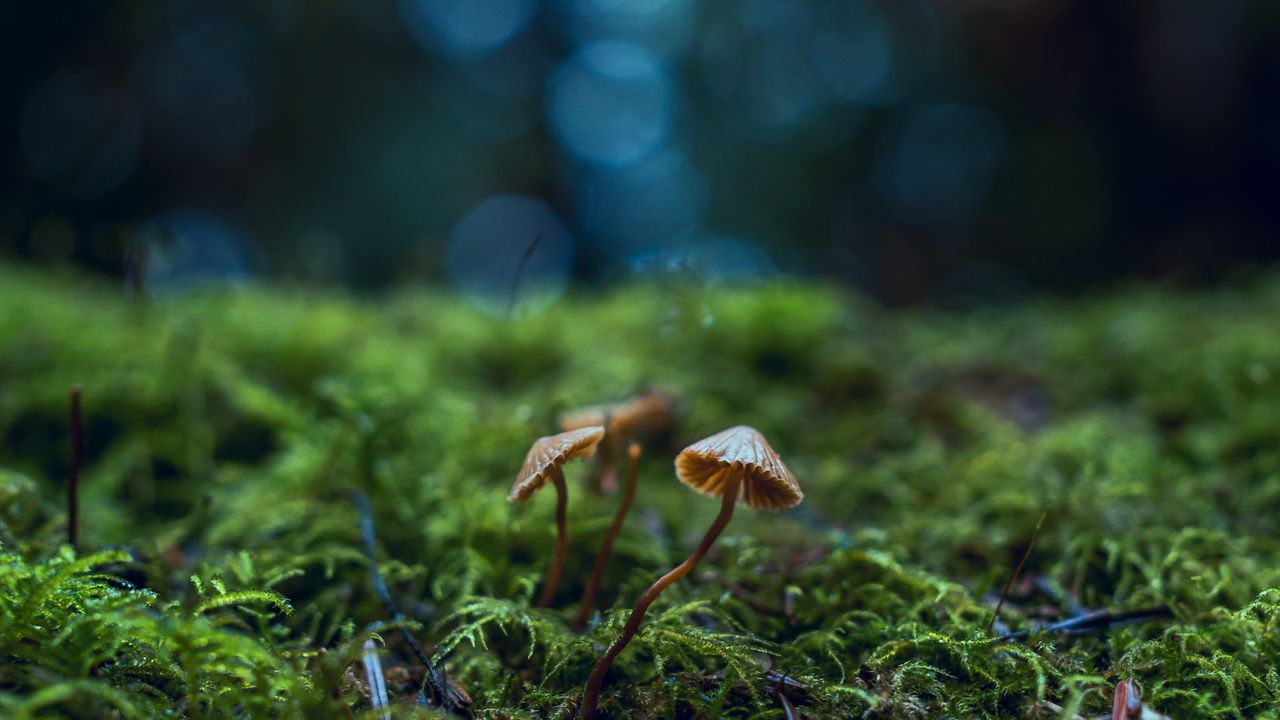
- Fruiting body is the mushroom itself, the part with the highest, most characterized beta-glucan content.
- Mycelium on grain (MOG) is the root-like network grown on a grain substrate and harvested together with it. Unless the grain is removed, a large fraction of the finished powder is starch.
Testing reveals which you actually have: a high alpha-glucan (starch) result relative to beta-glucan is the fingerprint of unremoved grain, regardless of what the front of the label says.
Active compounds beyond beta-glucans
Beta-glucans are the backbone marker, but several mushrooms have additional characteristic actives worth quantifying by LC-MS:
- Reishi: triterpenes (ganoderic acids), a marker of genuine fruiting-body material.
- Lion’s mane: hericenones and erinacines.
- Cordyceps: cordycepin and adenosine (and a check that the product is not merely Cordyceps-flavored filler).
Contaminant safety
Mushrooms are efficient bioaccumulators; they concentrate what is in their growing substrate, which makes contaminant testing especially important here.
Heavy metals
Mushrooms readily take up lead, arsenic, cadmium, and mercury. Cadmium in particular accumulates in fungal tissue. ICP-MS quantifies these against safety limits.
Microbials and pesticides
A standard panel covers total aerobic count, yeast and mold, and pathogen screening, plus pesticide residues depending on sourcing.
What a real mushroom COA shows
| Test | Method | Why it matters |
|---|---|---|
| Beta-glucans | Enzymatic assay | True functional potency |
| Alpha-glucans | Enzymatic assay | Reveals grain/starch content |
| Marker compounds | LC-MS | Triterpenes, cordycepin, etc. |
| Heavy metals | ICP-MS | Pb, As, Cd, Hg (bioaccumulated) |
| Microbials | Plate count / pathogens | Safety |
Read beta-glucan and alpha-glucan together. A strong beta-glucan number with low alpha-glucan points to genuine fruiting-body material; the reverse points to a grain-heavy product wearing a mushroom label.