A cosmetic or personal-care product has to satisfy two very different kinds of testing before it should reach a shelf: the chemistry that proves it contains what the label claims and nothing harmful, and the microbiology that proves it stays safe in a consumer’s hands for months. This guide covers the full picture (active ingredients, microbial safety, heavy metals, and stability) and where each fits.
What cosmetic testing covers
Cosmetic testing spans analytical chemistry and microbiology. The exact panel depends on the product (a leave-on serum, a rinse-off cleanser, a color cosmetic) and the claims it makes, but the categories below apply broadly.
Active ingredient and claim verification
If a product claims a specific active (a percentage of niacinamide, vitamin C, retinol, or a named peptide), that claim should be verified by quantitative analysis (typically HPLC). Claim verification protects the brand as much as the consumer: an under-formulated active is a compliance and reputation risk, and an over-formulated one can be a stability or irritation problem.
Microbial safety
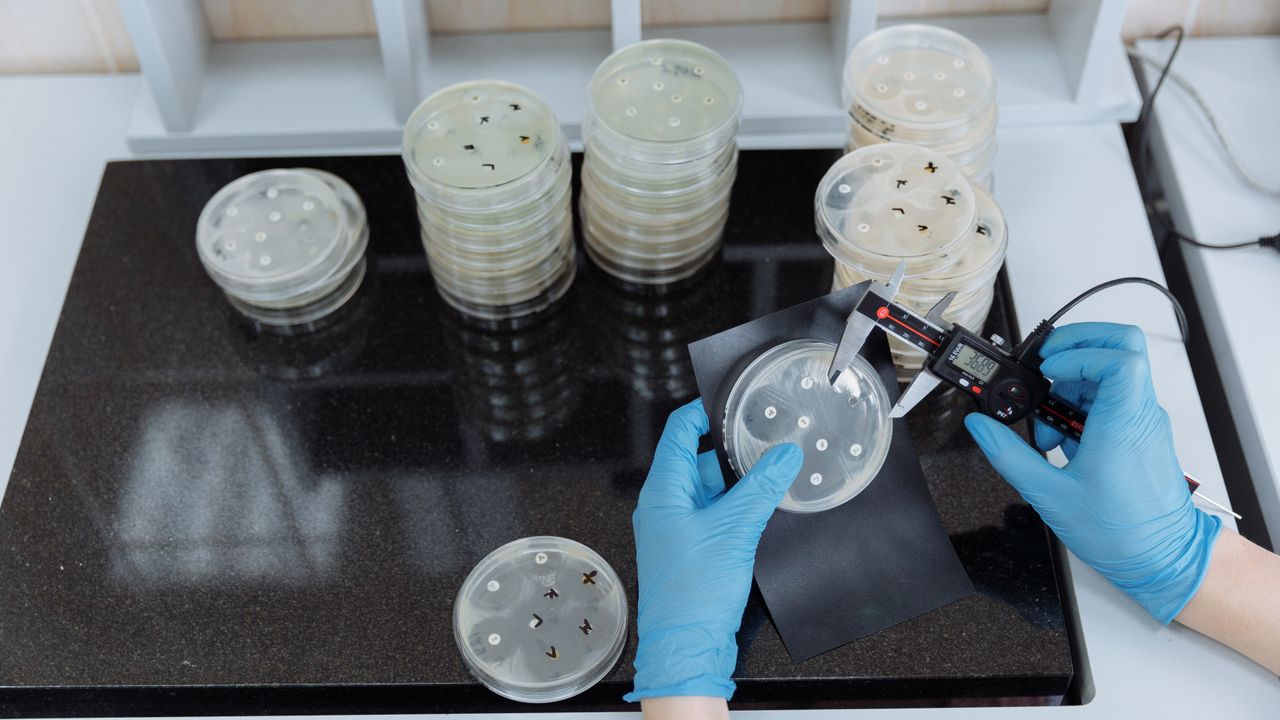
Any product containing water can support microbial growth. Microbial testing covers two things: enumeration (total aerobic microbial count, plus yeast and mold) and pathogen screening for organisms such as Staphylococcus aureus, Pseudomonas aeruginosa, E. coli, and Candida albicans. Enumeration confirms the product is clean as made; the closely related preservative efficacy (challenge) test confirms it stays clean in use.
Heavy metals and impurities
Trace heavy metals can enter cosmetics through raw materials, especially mineral pigments and colorants used in color cosmetics. Lead, arsenic, cadmium, and mercury are quantified by ICP-MS against established limits, a routine expectation for products applied to skin or lips.
Stability and packaging compatibility
Stability testing establishes that a product holds its appearance, performance, active content, and preservation over its shelf life. Real-time and accelerated studies track the formula under defined conditions, and packaging-compatibility testing confirms the product and its container do not adversely affect each other over time.
Regulatory context
In the United States, the Modernization of Cosmetics Regulation Act (MoCRA) has raised expectations around safety substantiation and record-keeping. Other markets, notably the EU, impose their own requirements. Testing scope should be matched to the markets a product will actually sell in; an accredited lab can help map the panel to those requirements.
A cosmetic testing panel
| Area | Test | Purpose |
|---|---|---|
| Chemistry | Active ingredient quantification | Claim verification |
| Safety | Heavy metals (ICP-MS) | Elemental impurity limits |
| Microbiology | Enumeration + pathogens | Product is clean as made |
| Microbiology | Preservative efficacy (challenge) | Stays clean in use |
| Stability | Real-time / accelerated | Shelf life and packaging |