Before a cream, lotion, or serum ships, its preservative system has to prove it can survive a deliberate microbial assault. That proof is the preservative efficacy test (often called the challenge test), and it is one of the most important safety tests in personal care. This guide explains how it works, what organisms are used, how results are judged, and what a passing result actually proves.
Why preservation matters
Any water-containing product is a potential home for bacteria, yeast, and mold. Consumers dip fingers into jars, leave caps off, and store products in warm bathrooms for months. A preservative system exists to neutralize the microbes that inevitably get introduced, and the challenge test is how you confirm that system actually works before the product is in anyone’s hands.
What the challenge test does
The test deliberately does what you hope never happens in real life: it inoculates the product with a known, high dose of microorganisms, then measures how effectively the formulation kills or suppresses them over time. A product that cannot control a deliberate inoculation cannot be trusted to control accidental contamination in use.
The test organisms
Standard methods use a defined panel spanning the major microbial threats:
- Bacteria: Staphylococcus aureus, Pseudomonas aeruginosa, and Escherichia coli.
- Yeast: Candida albicans.
- Mold: Aspergillus brasiliensis.
Each is introduced at a high, defined concentration so the test represents a genuine worst-case challenge.
How results are read: log reduction
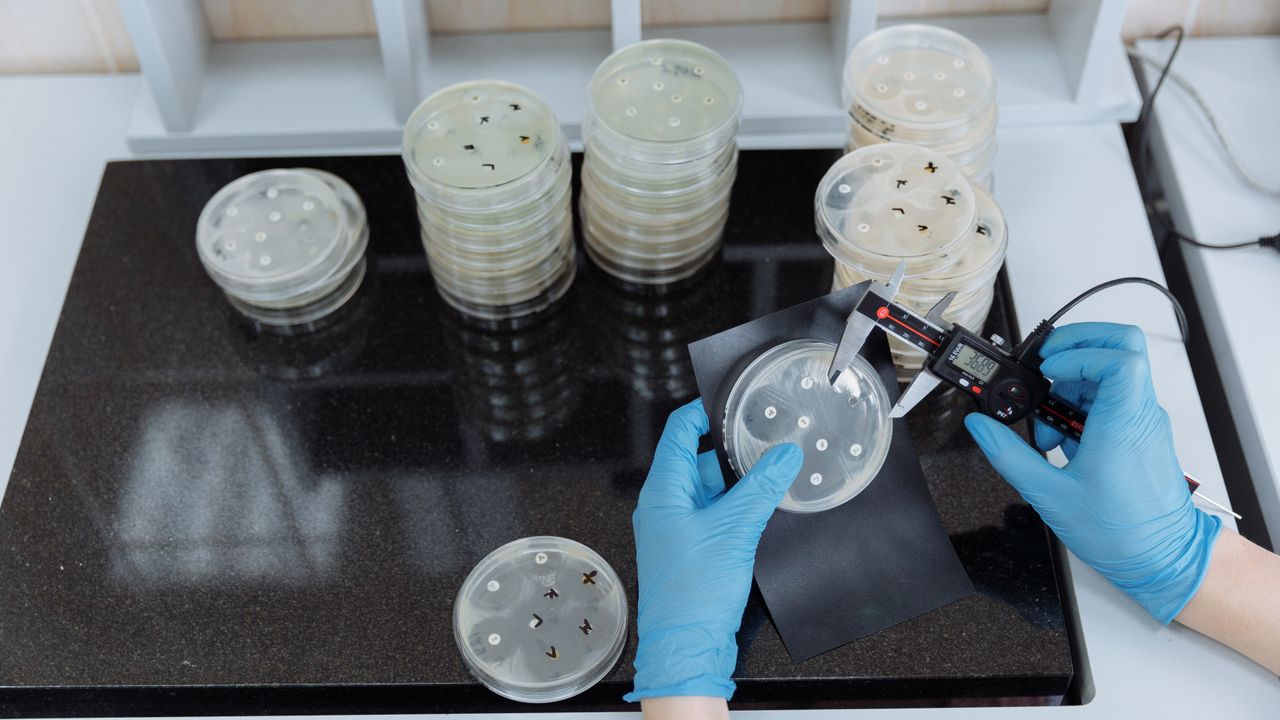
After inoculation, the product is sampled at set time points (commonly at 7, 14, and 28 days), and the surviving microbial population is counted. The result is expressed as a log reduction: how many orders of magnitude the population dropped.
Acceptance criteria (for example, USP <51>) define how much reduction is required, and how quickly, for a product to pass, with distinct requirements by product category and time point.
A passing result shows the preservative system drives the microbial load down and keeps it down through the full test window, not just an initial dip followed by regrowth.
When it fails
A failing system does not need more testing. It needs reformulation. Common responses are adjusting the preservative package, changing concentrations, lowering water activity, or modifying pH. The product is then re-challenged. Passing the challenge test is a prerequisite, not an optional extra, for a water-containing product.
Related standards
The most common frameworks are USP <51> (Antimicrobial Effectiveness Testing) in the US, ISO 11930 internationally, and the European Pharmacopoeia method. They share the same logic (deliberate inoculation, timed sampling, log-reduction criteria), and a lab will run the one that matches the product’s target market.